🛑Ferjal... News
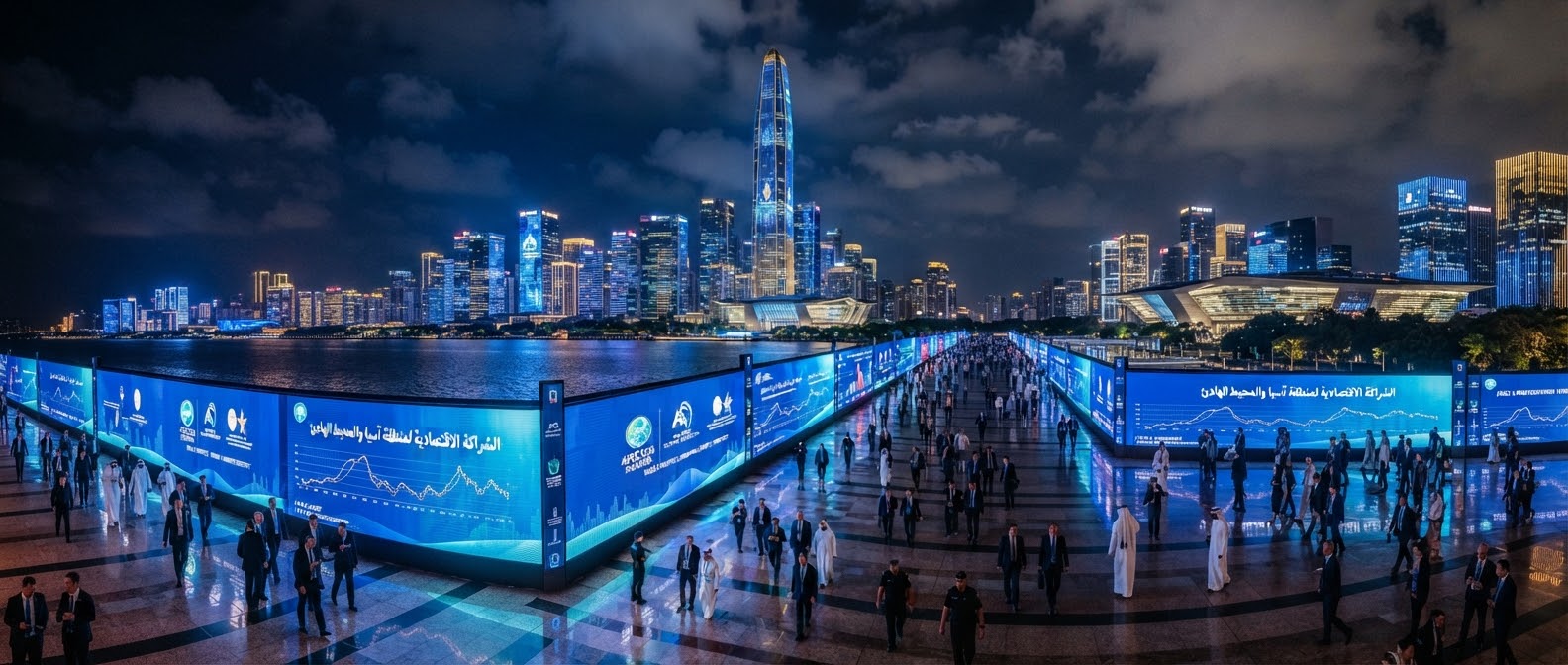
At a time of exceptional international sensitivity, the world’s attention is turning to the Chinese city of Shenzhen, which is hosting the 33rd APEC Economic Leaders’ Informal Meeting on November 18 and 19. The meeting comes amid accelerating geopolitical and economic transformations, making it an event that goes beyond the traditional economic agenda and raises important questions about the future of international cooperation and the balance of global growth in the coming phase.
The significance of what has come to be known as the “Shenzhen timing” stems from its coincidence with a period marked by escalating international tensions and growing unilateralist and protectionist trade policies. Meanwhile, the global economic system faces interconnected challenges involving supply chains, trade, investment, and technological competition. Against this backdrop, Asia-Pacific economies are seeking to strengthen their position as one of the world’s major engines of growth, relying on openness, economic integration, and cooperation.
The implications of the meeting, however, go beyond the current international circumstances. It coincides with the 20th anniversary of APEC leaders’ vision for establishing a Free Trade Area of the Asia-Pacific, a vision that has gained renewed importance amid the need to reduce trade barriers, expand investment flows, and strengthen economic connectivity among the region’s economies.
For China, the Shenzhen meeting carries particular significance. It coincides with the 35th anniversary of China’s accession to APEC and takes place in the year marking the launch of its 15th Five-Year Plan, which places high-standard opening-up and the expansion of mutually beneficial cooperation among its key priorities for the coming phase. This reflects Beijing’s determination to further consolidate its economic and trade presence and expand its partnerships with regional and international economies.
In this context, the vision of Chinese President Xi Jinping stands out. At last year’s APEC Economic Leaders’ Informal Meeting, he stressed the importance of remaining true to the forum’s founding objectives, foremost among them promoting economic growth and improving people’s well-being, sharing development opportunities, and achieving mutual benefit through openness and cooperation. He also called for advancing economic globalization in a more inclusive, equitable, and mutually beneficial direction.
Since the beginning of this year, China has worked with APEC member economies to advance the forum’s agenda under the theme “Building an Asia-Pacific Community and Promoting Shared Prosperity,” guided by three key priorities: openness, innovation, and cooperation. More than 300 meetings and activities have been held under the forum’s various mechanisms, resulting in important understandings and areas of consensus across several fields of joint cooperation, laying a solid foundation for the Shenzhen meeting.
These priorities have taken on even greater importance amid rapid technological and industrial transformations. Economic competition is no longer confined to traditional trade or the volume of exports and investment; it has expanded to encompass artificial intelligence, advanced technologies, emerging industries, and the digital economy. Innovation is therefore one of the key factors shaping the future global economy, while cooperation is essential to preventing widening economic and technological gaps between countries.
China is counting on the Shenzhen meeting to provide an opportunity to renew commitment to the forum’s shared objectives, expand avenues for openness, foster an environment conducive to innovation, and create broader prospects for economic, trade, and investment cooperation. Such efforts would strengthen the ability of Asia-Pacific economies to address challenges and capitalize on emerging opportunities.
The significance of the “Shenzhen timing” lies not merely in the convening of a high-level international meeting, but also in the nature of the period in which it is taking place and the economic messages it conveys about the future of openness, integration, and cooperation in a world where competition is intensifying and interests are increasingly interconnected.
As attention turns to the outcomes of the meeting, the most important test will be the ability of Asia-Pacific economies to translate shared understandings into practical steps, enabling the region to play a more influential role in supporting global growth and shaping the future of the international economy in the years ahead.